Ask These 6 Questions Before You Deploy Your Next Printer (2026 Guide)

May 26, 2026
 25577 views
 0 comments
Office Technology Guide
A practical printer deployment checklist for Florida businesses opening a new office, adding a department, or replacing aging fleet hardware in 2026.
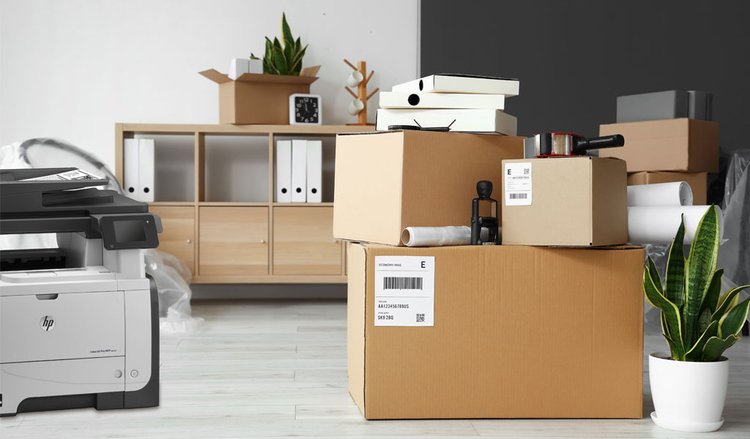
Before you deploy a new office printer in 2026, answer six core questions: what does your current setup look like, what connectivity do you need, what type of work environment (hybrid, remote, on-site) does the printer serve, how big is the workforce, how long will the office be operational, and where can you improve? Smart Technologies helps Central Florida businesses match printer specs to real workflow, with managed print agreements typically cutting print spend by 30 to 50 percent.
Printer deployment is a budget decision, a security decision, and a workflow decision
A printer feels like a small purchase. It is not. Once you add toner, paper, repairs, downtime, and the staff hours lost to print problems, the average employee work-related printing habit reaches roughly $725 per year, according to figures cited in industry analyses (verify against your own usage data). Multiply by your headcount and the number gets serious quickly.
The choice also shapes your security posture. Recent surveys suggest 67 percent of organizations faced a print-related breach in 2024, with only 36 percent applying firmware updates promptly. So a printer rollout is also a small cybersecurity project, not a furniture decision. We recommend you verify the latest figures from primary sources before quoting them in board meetings.
And the choice shapes daily workflow. Hybrid teams print from phones, tablets, home networks, and shared workspaces. A device picked for a 2018 office often cannot keep up. So Smart Technologies treats every new deployment in Daytona Beach, Orlando, and across Central Florida as a fresh assessment, not a like-for-like swap.
Print cost reduction reported by 78 percent of clients after moving to managed print services (source: industry MPS market reports for 2025 and 2026; please confirm with your provider before quoting).
What does my current printer setup actually look like?
Start with what you have. Walk every department: accounting, operations, marketing, sales, the front desk. Ask each team how they use the printers today. What works? What hurts?

Look for patterns. Devices: hardwired, wireless, or both? Job routing: users dropping off prints at the wrong floor because a network share went stale? Scans: landing in inboxes the user never checks? Walking distance: people crossing the building for color prints because the closest device is mono only?
You also want a baseline. Pull volume counters off each existing device for the past 90 days. Note color versus mono mix. Capture paper sizes. Record the apps people print from. One audit like this usually surprises everyone.
What to capture during your audit
- Monthly page volume per device, color vs mono
- Average job size and peak hours
- Paper sizes and special stock (envelopes, labels, letterhead, NCR)
- Apps in heaviest use for printing (Microsoft 365, QuickBooks, EHR, ERP)
- Top three complaints from each department
- Toner spend and service ticket counts over the last twelve months
If gathering this feels like more work than your team has time for, Smart Technologies runs a free managed print services assessment for Florida businesses. We bring the meter readers; you bring the coffee.
Will the printer need to connect to other branch locations or cloud apps?
Knowing connectivity requirements upfront saves painful changes later. Many Central Florida companies run multiple locations, a remote workforce, and a stack of cloud apps. The printer fleet has to fit all of it without becoming the weak link.
For multi-site offices, deploying printers with Group Policy is a clean way to push drivers and settings consistently. For something more flexible, a print management platform can pull every device into a single dashboard so IT does not have to chase each printer individually.
Connectivity features worth asking about
- Native AirPrint, Mopria, and mobile app printing
- Cloud print release (Universal Print, PaperCut Hive, similar)
- Direct scan to OneDrive, SharePoint, Google Drive, and Dropbox
- Pull printing across locations with a single login
- SNMPv3 monitoring for fleet management
- Optional fax over IP for compliance-heavy industries
If your team is split across Volusia, Flagler, and the Orlando metro, this question matters more than people expect. A printer locked to a single VLAN becomes a forever ticket.
What type of work environment do you actually run?
Office layouts shifted dramatically after 2020 and have not really stopped. Hybrid teams need printers built for home networks, the main office, and shared coworking space. Construction firms need ruggedized devices near job-site trailers. Medical practices need devices ready for EHR systems and HIPAA workflows.
So the right question is not “what is the best printer?” It is “what is the best printer for how we actually work?”
Common environments and the features that fit
- Hybrid office: mobile printing, secure release at the device, cloud queues
- Fully remote with shared office: pay-as-you-go MPS, lightweight desktop units, central scan-to-email
- Manufacturing or warehouse: durable A3 multifunction units with high duty cycles, label printing
- Healthcare: HIPAA-aligned secure print release, audit logs, encrypted hard drives
- Legal, finance, accounting: secure scan workflows, OCR, automated retention
- Education and nonprofit: cost recovery, quotas, simple print release for shared devices
Smart Technologies builds deployments around the workflow first and the hardware second. The Ricoh, Canon, HP, and Lexmark catalog is wide enough so almost any workflow finds a fit. The trick is matching it correctly.
Estimated global managed print services market size in 2026, projected to reach roughly $83 billion by 2031 (figures from industry market reports; please verify the latest numbers if quoting in a formal document).
How big will the workforce be, and how much will they really print?
A commonly cited benchmark suggests one printer per 4.4 employees. We have seen the figure repeated across industry blogs, and it is a useful starting estimate. Treat it as a rough planning number rather than a hard rule, and verify against your own volume data.
Then look at the actual print volume per person. Knowledge worker counts are very different from claims teams running insurance documents. A property management firm printing leases and inspection reports needs more device capacity than a SaaS shop printing the occasional one-pager.
Sizing your fleet for real volume
- Light office (under 500 pages per user per month): smaller MFPs are fine, but plan for a backup
- Moderate office (500 to 2,000 pages per user per month): mid-range A4 or A3 color MFP per cluster
- Heavy print (2,000+ pages per user per month): A3 production-class MFP, possibly paired with secondary mono workhorses
- Mixed workflows: combine a central production device with smaller desktops at each pod
And size for the worst week, not the best one. Tax season, open enrollment, end-of-quarter, and back-to-school spikes all break under-sized fleets.
How long will this office be operational?
Please do not take offense. The question simply clarifies the use case. A pop-up satellite office for a single year has different math than a flagship location with a ten-year lease.
Buying outright makes sense when the device will live in the building for five-plus years and the volume is predictable. Leasing or going with a fair market value MPS agreement makes sense when you want a refresh cycle baked in, or when capital is tight, or when the office may not be permanent.
A simple decision matrix
| Office Lifespan | Best Acquisition Model | Why It Fits |
|---|---|---|
| Less than 2 years | Short-term lease or rental, MPS-only | Avoid sunk cost on hardware you will not keep |
| 2 to 5 years | 36 to 48 month FMV lease | Spreads cost, predictable refresh, service included |
| 5+ years, stable volume | Purchase plus MPS contract | Own the hardware, outsource toner and service |
| Multi-site rollout | Master lease or MPS agreement | Single contract, single invoice, single dashboard |
| Seasonal or pop-up | Short-term rental | Flexible, easy to return when the project ends |
If you are not sure which fits, our team is happy to map it out with you. We do this every week for Florida businesses, and the right answer is usually some blend of these models.
Is there an opportunity to make the office better, not just functional?
A new location is the cleanest moment to fix the frustrations from the old office. Maybe it is the constant toner runs. Perhaps print jobs sit on the tray for hours. Or there is no real scan-to-folder workflow.
So treat the rollout as a chance to upgrade. A few common improvements:
- Move to a true managed print services agreement so toner shows up before you run out
- Layer on secure print release so confidential documents do not sit out in the open
- Add scan-to-cloud workflows so paper does not pile up on desks
- Bring in a document management system to digitize HR, AP, contracts, and customer files
- Set print quotas or rules so casual color printing stops eating budget
- Build a simple offboarding step that wipes a departing employee’s print credentials
And do not skip cybersecurity. Modern multifunction devices store data, run a small operating system, and sit on your network. Treat them like the endpoints they are. Smart Technologies layers our Managed IT and Managed Print teams so the printer fleet inherits the same patching cadence and security policies as the rest of your environment.
What a printer really costs over five years
Sticker price is rarely the biggest line item. Cost per page, service, supplies, downtime, and energy combine to dwarf the device cost over its life. Here is a simplified comparison to anchor expectations. Actual numbers vary by model, volume, and contract terms; please ask for a quote based on your real meter reads.
| Profile | Approx. Lease or Purchase | Cost Per Page (Mono / Color) | Common Use Case |
|---|---|---|---|
| Small office, under 10 users | $60 to $120 / month lease, or $2,000 to $4,000 purchase | ~1.5 cents / ~7 cents | Light volume, mostly mono |
| Mid-size office, 10 to 50 users | $125 to $250 / month lease, or $4,000 to $8,000 purchase | ~1 cent / ~5 cents | Mixed mono and color, scan-heavy |
| Enterprise or high-volume | $275 to $600+ / month lease, or $8,000 to $20,000+ purchase | ~0.8 cent / ~4 cents | Production volume, A3, finishing |
| Departmental color desktop | $40 to $80 / month lease | ~2 cents / ~9 cents | Single team, light color |
Note these are illustrative ranges based on figures cited in 2025 and 2026 industry reports. Pricing varies by manufacturer, region, contract length, and current promotions. Your Smart Technologies copier and printer team can give a quote tailored to your actual volume.
Six ways our Central Florida team makes a printer rollout less painful
Free Print Assessment
We meter your current fleet, count real volume, and benchmark spend so the new setup is sized for facts, not guesses.
Vendor-Neutral Hardware
Authorized for Ricoh, Canon, HP, Lexmark, and more. We pick what fits your workflow, not what is sitting in inventory.
Managed Print Services
Toner ships before you run out. Service calls are included. One predictable monthly bill.
Secure Print Release
Jobs hold at the queue until the user authenticates at the device. Confidential documents stop landing in the tray.
Document Management
Pair the rollout with scan-to-cloud workflows so paper does not pile up. HR, AP, and contracts get a real home.
Managed IT Layer
Our Managed IT team patches printer firmware on the same cadence as the rest of your fleet. Printers stop being the soft target.
Six mistakes we see during printer deployments
If you are evaluating a rollout right now, scan this list before you sign anything. Most are easy to avoid once you know what to look for.
- Buying for today only. Hiring plans, new departments, and seasonal spikes blow past under-sized devices fast. Size for year three, not month one.
- Ignoring scan workflows. Print volumes drop. Scan volumes climb. A device with weak scanning will frustrate your team daily.
- Skipping firmware patching. Survey data suggests only about a third of organizations patch printers promptly. Pick a vendor or MSP willing to own this for you.
- Underestimating color. Color spend creeps. Default to mono and require a click to print color, and the bill drops fast.
- Mismatched paper handling. Envelopes, labels, and oversized stock break devices never specified for them.
- No exit plan. If your lease ends and you have not negotiated terms for return shipping and final meter reads, the bill at the end can sting.
What Central Florida businesses get wrong about printer deployments
We are based in Daytona Beach, and our team has been deploying office technology across Florida since 1999. So we have seen the local patterns.
Humidity matters more than people expect. Devices sitting near the door of a coastal office or in a back room without strong climate control pull moisture into paper trays. Sheets cling. Jams climb. We often recommend a small dehumidifier and a covered intake tray for offices anywhere east of I-95.
Hurricane season also shapes the plan. A printer losing power mid-job during a tropical storm, and then coming back on an unstable line, can corrupt firmware. So a basic surge protector and a small UPS are not optional in Volusia, Flagler, or Brevard. We bundle this into our standard deployment checklist.
Multi-site businesses across the Orlando metro should also think about central monitoring. With offices in Lake Mary, Winter Park, and Daytona, you do not want three different IT teams managing toner separately. A single MPS dashboard usually solves it.
FAQ: printer deployment for Florida businesses
How many printers does a small office actually need?
A common rule of thumb is one printer per 4 to 5 employees, but the right number depends on real volume. A heavy-print insurance office may need more capacity per head than a software firm. Run an audit first; the answer often surprises people.
Should we buy, lease, or use a managed print service?
Buy if the office is permanent and volume is predictable. Lease if you want a refresh cycle built in. Use MPS if you want toner, service, and predictable monthly billing handled for you. Most of our Florida clients land on a lease plus MPS combination.
What is the average monthly cost of a multifunction office printer in 2026?
Roughly $60 to $250 per month for small to mid-size offices, and $275 to $600+ for higher-volume units. These ranges come from current industry guides; we recommend you verify with a quote for your specific volume and finishing requirements.
Is mobile printing secure for hybrid teams?
It can be, but only if you set it up correctly. Look for encrypted print queues, secure print release with PIN or badge, automatic job deletion after release, and audit logs. Default mobile print settings out of the box are not always secure.
How often should we patch printer firmware?
At minimum quarterly, and faster when a critical CVE is published. Industry surveys suggest only about 36 percent of organizations patch printers on time, which is why printers became a popular ransomware entry point. Smart Technologies handles patching for clients on our managed IT plans.
What is a realistic cost per page for color and mono?
For mono, expect roughly 0.8 to 2 cents per page on most office MFPs. For color, expect 4 to 9 cents per page. Exact numbers depend on yield, coverage, and contract. Always get the cost per page in writing as part of any lease or MPS agreement.
Can a managed print service really cut our print spend?
Industry reports suggest 30 to 50 percent savings for many organizations after moving to MPS, with ROI typically in 6 to 9 months. Savings vary; ask for a print assessment so any quoted savings reflect your actual usage.
Do we still need fax in 2026?
For some industries, yes. Healthcare, legal, and certain government workflows still require fax for compliance reasons. Modern MFPs can offer fax over IP that meets HIPAA standards, so faxing from a digital device is a reasonable option.
What features matter most for a hybrid office?
Mobile and cloud print release, scan to OneDrive or SharePoint or Google Drive, encrypted queues, and a touchscreen any staff member can actually use without a manual. If a printer cannot serve hybrid users cleanly, it will create friction every day.
How do we secure office printers against breaches?
Treat the printer like an endpoint. Change default passwords, disable unused protocols, encrypt the hard drive, enable secure print release, patch firmware on a schedule, and require user authentication. Resources from CISA and the NIST Cybersecurity Framework are useful references for hardening printer fleets.
What does Smart Technologies actually do during a deployment?
We assess current usage, recommend the right device mix, deliver and install, configure secure print release and cloud workflows, train your team, and stay on as your service and supply partner. Our Managed IT team also patches printer firmware on the same cadence as your other endpoints.
How long does a typical office printer rollout take?
For a single-site rollout of 3 to 6 devices, plan on two to three weeks from signed agreement to go-live. Larger multi-site deployments may run 6 to 10 weeks. A clean assessment up front shortens everything that follows.
Ready to deploy a printer fleet built around your real workflow?
Smart Technologies of Florida has been helping Daytona Beach, Orlando, and Central Florida companies size, secure, and support office technology since 1999. Tell us about your space and we will build a no-pressure recommendation.
(386) 252-2292
Business Transformation Agency
Related Posts

— Do Laser Printers Need Ink? Let’s Clear the Confusion
— What are Multifunction Printers? All About MFP Explained Simply