Maximize Efficiency: Streamlining Tips for Critical Services

March 7, 2025
 1211 views
 0 comments
Streamlining business processes so as to maximize efficiency is a pivotal step for businesses aiming to boost productivity, cut excessive costs, and improve operational output.
- Efficiency: Save time by removing unnecessary steps.
- Productivity: Focus on vital tasks for better outcomes.
- Waste Reduction: Eliminate redundant efforts to conserve resources.
For mid-sized retailers in Daytona Beach, FL, running an efficient business isn’t just beneficial—it’s essential. As technology continues to evolve, the challenge lies in streamlining operations to cut costs while equipping your team for success.
Streamlining isn’t about replacing your team with machines. It’s about using the right technologies to simplify tasks and make work more meaningful for everyone.
Quoting the wise words of Napolean Hill, “Imagination pays!” Businesses that innovate and refine their processes can transform mundane tasks into efficient, value-driven activities.
Let’s start on a journey to uncover how strategic process improvements can lead to significant gains in productivity and resource savings.
Understanding Streamlining Processes
Streamlining a process so as to maximize efficiency often feels like solving a puzzle. The pieces? Process optimization, simplification, and eliminating inefficiencies.
Let’s break it down:
Process Optimization
Think of process optimization as fine-tuning a car engine. It’s about making sure every part of your business runs smoothly and effectively. You want to get rid of the bumps and ensure a smooth ride. By optimizing processes, businesses can achieve faster turnaround times and improve overall performance.
Case in Point: The Toyota Production System revolutionized car manufacturing by optimizing workflow. This method focused on reducing waste and improving efficiency, setting a global standard for process improvement.
Simplification
Simplification is all about making things easier. Imagine turning a complicated recipe into a simple one-page guide. That’s what simplification does for business processes. It cuts through the clutter, so only the essential steps remain, making it easier for your team to follow and execute.
Example: Piggly Wiggly, a small grocery store, simplified the shopping experience by letting customers choose their items. This straightforward change improved inventory management and staff efficiency.
Eliminating Inefficiencies
Finally, eliminating inefficiencies is like cleaning out a cluttered garage. You remove what you don’t need, freeing up space and resources. In business, this means identifying bottlenecks and redundant tasks that slow down your workflow.
Tip: Use data analytics to spot inefficiencies. By analyzing your processes, you can pinpoint areas that need improvement and prioritize them based on impact.
Streamlining isn’t a one-time task; it’s an ongoing journey. With the right strategies, businesses can transform their operations, making them more efficient and productive. Let’s dive deeper into the best practices for streamlining business processes.
Streamlining a Process So as to Maximize Efficiency
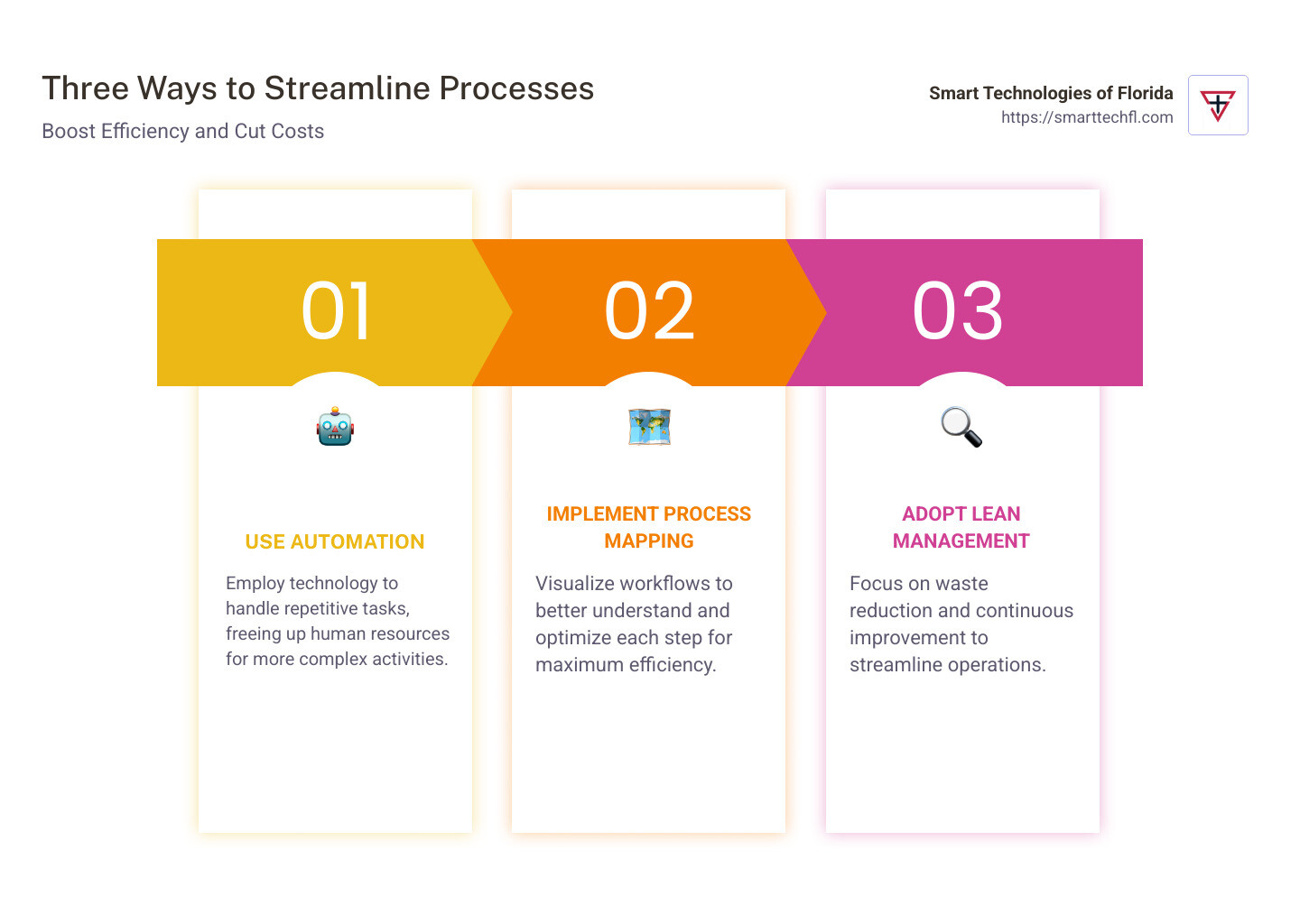
Streamlining a process so as to maximize efficiency is key to changing business operations. This involves three main steps: workflow analysis, automation, and process mapping.
Workflow Analysis
Workflow analysis is like examining a map before a road trip. You need to know the route to avoid detours and delays. By analyzing workflows, businesses can identify areas where tasks are getting stuck or taking too long. This step is crucial for spotting inefficiencies and finding opportunities for improvement.
Fact: According to research, businesses that regularly analyze their workflows can reduce process times by up to 30% .
Automation
Automation is like having a reliable assistant who handles repetitive tasks. It frees up time for your team to focus on more meaningful work. By automating routine processes, businesses can save time and reduce errors.
Quote: “Automation tools also improve the overall employee experience: nearly 90% said they felt more satisfied with their jobs since they began using the technology” .
Process Mapping
Process mapping is the art of creating a visual representation of your workflows. It’s like drawing a blueprint for a building. This helps everyone understand the steps involved and where improvements can be made.
Tool: Use process maps like flowcharts or SIPOC diagrams to get a clear view of your current processes. This visualization makes it easier to spot bottlenecks and plan for changes .
By focusing on these steps, businesses can streamline operations and achieve greater efficiency. This sets the stage for implementing the best practices that drive continuous improvement and success.
Let’s explore the best practices for streamlining business processes.
10 Best Practices for Streamlining Business Processes
Map Current Processes
Mapping current processes is like creating a road map for your business operations. Start by visually diagramming each step involved in your processes. This gives a clear picture of how tasks flow and helps identify where resources are allocated. By understanding the current landscape, you can pinpoint inefficiencies and areas ripe for improvement. Tools like flowcharts can be invaluable here, offering a bird’s-eye view of your operations.
Tie Processes to Business Outcomes
Aligning processes with business goals ensures every step contributes to the organization’s success. Evaluate how each process impacts your goals. If a process no longer supports your objectives, it’s time for a change. This alignment not only improves efficiency but also keeps everyone focused on outcomes that matter most.
Identify Areas of Improvement
Use product analytics to uncover bottlenecks and inefficiencies. These insights allow you to prioritize areas needing attention. Look for steps that slow down operations or waste resources. By identifying these pain points, you can focus your efforts where they’ll have the most impact.
Simplify and Standardize
Simplification and standardization are key to efficient workflows. Identify tasks that can be automated or cut altogether. If similar processes exist with variations, standardize them for a uniform progression. This makes it easier for employees to adapt and ensures consistency across departments.
Leverage Lean Principles
Adopt lean principles to eliminate waste and boost efficiency. Focus on continuous improvement by regularly reviewing processes and making incremental changes. Lean methodologies help businesses streamline operations by cutting out non-value-adding activities.
Improve Communication
Open channels and regular process updates are essential for keeping teams informed and aligned. Ensure that everyone has access to the latest information and can communicate easily. This transparency fosters collaboration and reduces misunderstandings.
Provide Support in the Flow of Work
Incorporate digital adoption tools and in-app messaging to support employees as they work. These tools can offer guidance and help resolve issues without disrupting the workflow. By providing support within the flow of work, you improve productivity and employee satisfaction.
Test the New Workflow
Before fully implementing changes, conduct A/B testing in a live environment. This allows you to compare the new workflow with the old and measure performance. Testing helps identify any issues before they become widespread, ensuring a smoother transition.
Refine and Optimize
Use key metrics to evaluate the effectiveness of new workflows. Continuous improvement is crucial; regularly refine processes based on performance data. This ongoing optimization helps maintain efficiency and adapt to changing needs.
Focus on Customer Impact
Streamlined processes should improve customer service and satisfaction. Evaluate how changes affect your customers and make adjustments to improve their experience. Happy customers are a sign that your processes are working effectively.
By implementing these best practices, businesses can create a more efficient, productive, and satisfying work environment. This not only benefits the organization but also leads to happier employees and customers.
Benefits of Streamlining Processes
Streamlining a process so as to maximize efficiency brings a host of benefits to any organization. Let’s explore how these improvements can lead to increased efficiency, cost reduction, and improved employee satisfaction.
Increased Efficiency
Streamlining processes means cutting out unnecessary steps and focusing on what truly matters. This approach reduces the time it takes to complete tasks, allowing employees to reach their goals faster. According to a recent survey, over 90% of workers found that automation solutions increased their productivity. By eliminating redundancies and optimizing workflows, businesses can achieve a smoother operation, leading to faster turnaround times and higher quality outcomes.
Cost Reduction
When processes are streamlined, businesses can save on costs by reducing manual work and eliminating bottlenecks. Automation plays a crucial role here, as it cuts down on repetitive tasks and minimizes errors. This not only lowers operational expenses but also allows companies to allocate resources more effectively. A survey found that 54% of office professionals spent more time searching for documents than responding to emails. Streamlined processes can tackle such productivity bottlenecks, translating to significant cost savings.
Improved Employee Satisfaction
Employees thrive in environments where they can work efficiently and without unnecessary problems. Streamlining processes reduces frustrations and creates a transparent working environment. It empowers employees by giving them clarity and control over their tasks. Happier, more engaged teams are more productive and tend to stay with companies longer. In fact, 80% of employees reported that automation gave them more time to focus on meaningful projects and learn new skills. This leads to a more satisfying work experience and boosts overall morale.
By focusing on these benefits, businesses can create a more efficient and productive work environment, leading to happier employees and satisfied customers.
Frequently Asked Questions about Streamlining Processes
What is the difference between a process and a workflow?
When we talk about streamlining a process so as to maximize efficiency, it’s important to understand the difference between a process and a workflow.
A process is a series of steps or tasks that are performed in a specific order to achieve a desired outcome. Think of it as the big picture. For example, a customer service process might include handling inquiries, resolving complaints, and processing returns.
A workflow, on the other hand, is the sequence of tasks needed to complete a specific task within that process. It’s like the smaller parts that make up the whole. In our customer service example, a workflow could be the steps taken to resolve a single complaint.
Understanding this distinction helps in mapping and optimizing tasks, ensuring that each part of the process is as efficient as possible.
How does streamlining improve efficiency?
Streamlining a process involves simplifying and optimizing tasks to eliminate waste. This leads to increased efficiency and productivity. By cutting out unnecessary steps and automating repetitive tasks, businesses can reduce the time and effort required to complete tasks.
In fact, companies lose 20-30% of their revenue each year due to inefficient processes. By streamlining, they can save on costs, reduce errors, and improve the quality of their services. This approach allows employees to focus on more meaningful work, leading to higher productivity and job satisfaction.
What are common challenges in streamlining processes?
While the benefits are clear, streamlining processes comes with its own set of challenges.
- Automation: Implementing automation solutions can be complex and requires careful planning. Employees may resist changes, fearing that automation could disrupt their workflow.
- Language Barriers: In global teams, language differences can hinder communication. Ensuring that everyone understands the new processes is crucial for successful implementation.
- Best Practices: With so much information available, it can be hard to identify the best practices that suit your company. Sharing knowledge and continuously improving processes are key to overcoming this challenge.
By addressing these challenges head-on, businesses can better streamline their processes, leading to greater efficiency and success.
Conclusion
At Smart Technologies of Florida, we believe that strategic change is the key to open uping the full potential of any business. Our approach centers on people, ensuring that every change we guide is aligned with the unique goals of our clients. With 23 years of experience in the industry, we understand that streamlining a process so as to maximize efficiency is not just about technology—it’s about empowering people to work smarter, not harder.
People-Centric Approach: Our team prioritizes the human element in every project. We know that the best technology solutions are those that improve, rather than replace, human capabilities. By involving employees at every stage, from planning to implementation, we foster a culture of collaboration and innovation. This not only makes transitions smoother but also ensures that every team member feels valued and engaged.
Custom Solutions: No two businesses are alike, which is why we offer customized solutions that fit your specific needs. Whether you’re looking to automate routine tasks or optimize complex workflows, our expertise in business process automation can help you achieve your efficiency goals. Our Business Process Automation Solutions are designed to streamline operations, reduce costs, and improve overall productivity.
In conclusion, streamlining processes is an ongoing journey that requires commitment, innovation, and a focus on people. At Smart Technologies of Florida, we’re committed to guiding you through this journey with our strategic, people-centric approach. Let’s work together to transform your business and achieve the efficiency you’ve been dreaming of.
Related Posts
— Streamline Your Business with Rule-Based Workflow Processing

— Secure Email Software for Business: Protection, Pricing, and Setup