The Power of Simplicity: Benefits of Streamlining Your Business Operations

February 26, 2025
 750 views
 0 comments
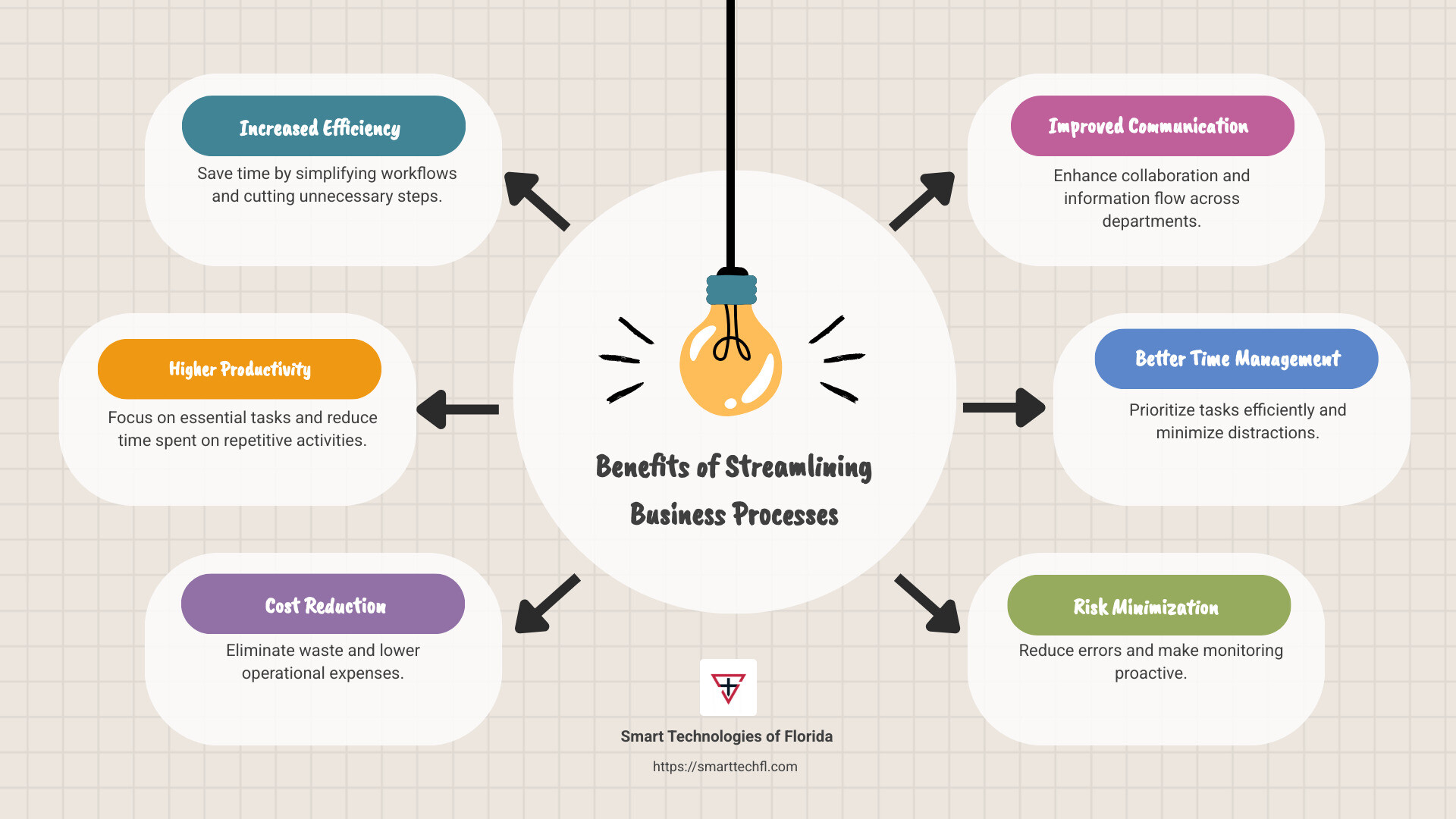
The benefits of streamlining business processes are vast and transformative for any organization. Here’s a quick look at what you stand to gain:
- Increased Efficiency: Save time by simplifying workflows and cutting unnecessary steps.
- Higher Productivity: Focus on essential tasks and reduce time spent on repetitive activities.
- Cost Reduction: Eliminate waste and lower operational expenses.
- Improved Communication: Improve collaboration and information flow across departments.
- Better Time Management: Prioritize tasks efficiently and minimize distractions.
- Risk Minimization: Reduce errors and make monitoring proactive.
For businesses, especially those like Smart Technologies of Florida that seek to thrive in a competitive marketplace, efficiency isn’t just a goal; it’s a necessity. Streamlining business operations not only boosts productivity but also sets the stage for operational excellence.
Consider this: in a world where customer expectations are changing, businesses can’t afford inefficiency. By integrating smarter processes, you not only cut costs but also improve your team’s capacity to engage more meaningfully with customers without feeling overwhelmed by outdated tools or processes.
Simplicity is powerful. As you refine and simplify your business operations, you’ll be better positioned to adapt, innovate, and ultimately, grow. Streamlined processes translate to a more agile and responsive business, capable of navigating the challenges of today’s market with ease.
Understanding Streamlining Processes
Streamlining business processes is all about making things simpler, faster, and more efficient. Think of it as tidying up your workspace, but for your entire organization. The aim is to cut out the clutter, get rid of unnecessary steps, and make sure everything runs like a well-oiled machine.
Process Simplification
Imagine trying to make a sandwich with a hundred steps. Sounds silly, right? Yet, many businesses operate with overly complicated processes that slow them down. Simplifying processes means breaking them down into the essential steps needed to achieve the goal. This not only speeds up operations but also makes them easier for everyone to understand and follow.
A great example is the shift from paper-based forms to digital ones. Instead of filling out multiple forms by hand, a single digital form can capture all the necessary information in one go. This change reduces errors and speeds up processing times.
Eliminating Redundancies
Redundancies are like those extra layers in a cake that nobody asked for. They make things heavier and more complicated than they need to be. By identifying and eliminating these redundancies, businesses can save time and resources.
For instance, if two departments are doing the same task separately, that’s a redundancy. Combining efforts or sharing information can streamline the process and free up resources for other tasks.
Workflow Optimization
Optimizing workflows is about finding the best way to complete tasks. It’s like rearranging your kitchen so you can cook dinner faster and with less hassle.
One powerful tool for workflow optimization is automation. By automating repetitive tasks, employees can focus on more important work that requires a human touch. This not only boosts productivity but also improves job satisfaction.
Consider the story of a small grocery store that revolutionized shopping by letting customers select their items instead of relying on staff. This simple change optimized their workflow and became a game-changer for the retail industry.
By focusing on process simplification, eliminating redundancies, and workflow optimization, businesses can open up the full potential of their operations. These strategies lead to smoother, faster processes that save time and money, making your business more agile and competitive.
Next, we’ll dive into the specific benefits of streamlining business processes, exploring how these changes can transform your organization.
Benefits of Streamlining Business Processes
Streamlining business processes isn’t just a buzzword—it’s a game-changer for companies aiming to thrive in today’s competitive landscape. By focusing on increased efficiency, cost reduction, and improved communication, businesses can open up significant advantages.
Increased Efficiency
When processes are streamlined, efficiency skyrockets. Employees know their roles clearly, which means less time wasted figuring out what to do next. This clarity leads to improved workflows, where tasks are completed faster and with fewer errors.
For example, when Haven Systems implemented their EPOS solutions, retail businesses saw a significant boost in efficiency. By automating stock control and managing deliveries, employees could focus on serving customers better instead of wrestling with paperwork.
Cost Reduction
Streamlining often leads to reduced costs. By cutting out unnecessary steps and automating routine tasks, businesses can save both time and money. Digitizing processes is a key strategy here.
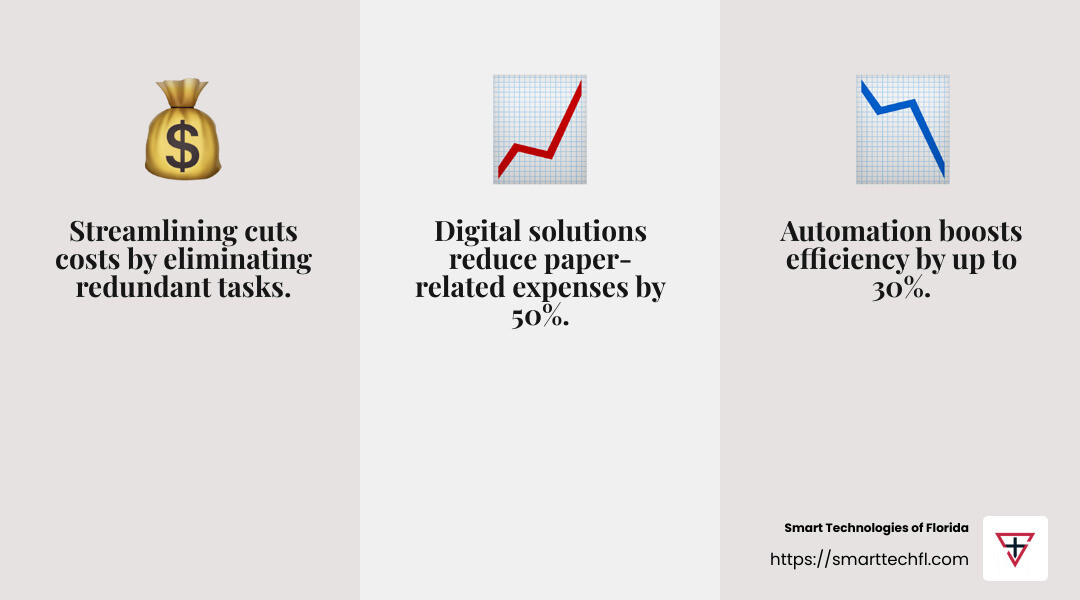
Think about the savings from moving away from paper forms to digital solutions. Not only does this cut down on paper costs, but it also reduces the need for physical storage and the time spent on manual data entry.
Improved Communication
A streamlined process fosters better communication across the organization. When everyone knows their responsibilities and the process is transparent, it reduces misunderstandings and improves collaboration.
Consider a centralized software system that connects all departments. Employees can share information quickly, avoiding the need for endless email chains or meetings to get everyone on the same page. This seamless flow of information ensures that everyone is aligned and working towards the same goals.
By focusing on these core benefits—increased efficiency, cost reduction, and improved communication—businesses can transform their operations. Streamlined processes not only make a company more agile and competitive but also create a more satisfying work environment for employees.
Next, we’ll explore the key strategies for streamlining, diving into how process mapping, lean principles, and automation can further improve your business operations.
Key Strategies for Streamlining
Streamlining business operations is like tuning a guitar—it requires precision and the right techniques. Let’s explore three key strategies: process mapping, lean principles, and automation.
Process Mapping
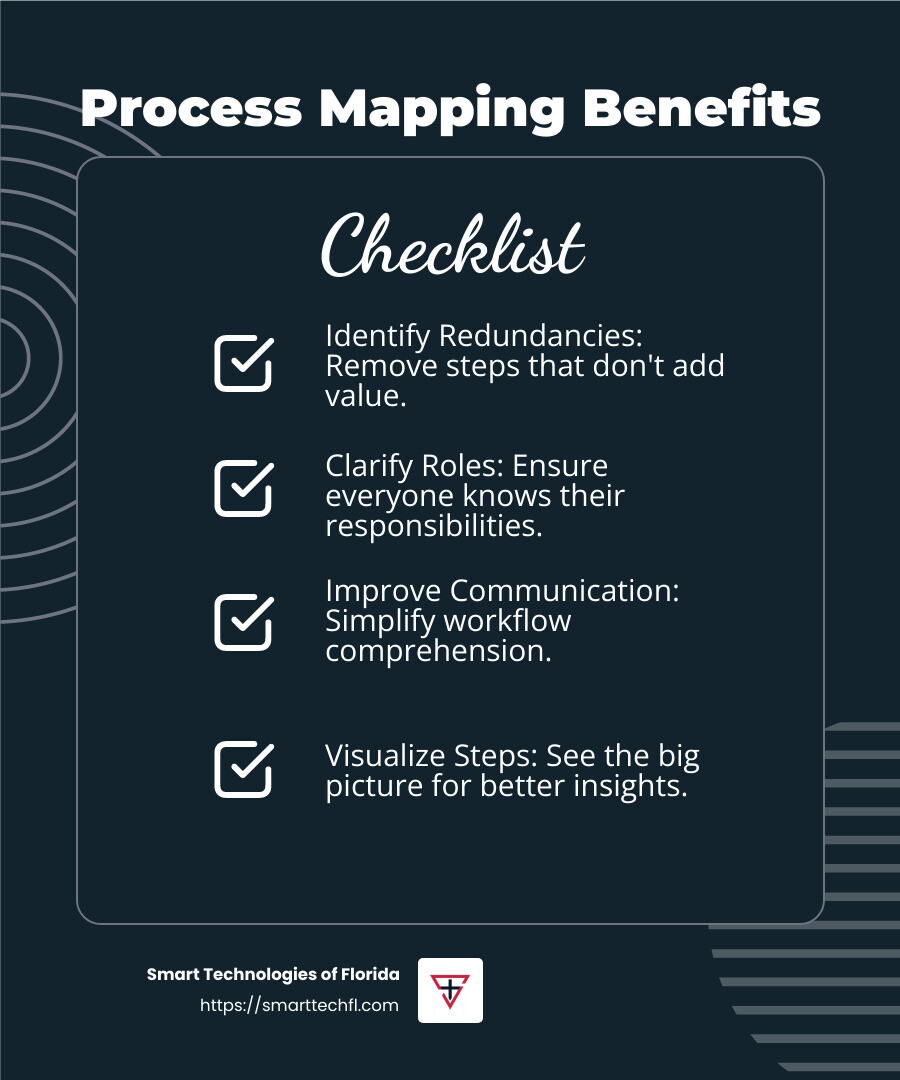
Process mapping is your roadmap to efficiency. It involves creating a visual diagram of every step in a process. This helps you see the big picture and spot areas for improvement.
Why map processes?
- Identify Redundancies: Find and eliminate steps that don’t add value.
- Clarify Roles: Ensure everyone knows their responsibilities.
- Improve Communication: Make it easier for teams to understand workflows.
Lean Principles
Lean principles focus on maximizing value by reducing waste. Think of it as trimming the fat from your processes.
Core lean principles include:
- Value Identification: Focus on what truly matters to customers.
- Continuous Improvement: Regularly refine processes for better results.
- Flow Creation: Ensure a smooth, uninterrupted workflow.
Toyota’s Production System is a classic example of lean principles in action. By eliminating waste and optimizing processes, Toyota transformed car manufacturing.
Automation
Automation is like having a reliable assistant who never sleeps. It takes over repetitive tasks, freeing up employees for more meaningful work.
Why automate?
- Boost Efficiency: Automate mundane tasks to save time.
- Reduce Errors: Machines are less prone to mistakes than humans.
- Improve Data Management: Use automation to handle data entry and analysis.
Consider a simple task like invoice processing. By automating this, businesses can speed up payment cycles and reduce errors, leading to faster decision-making and improved cash flow.
Streamlining strategies such as process mapping, lean principles, and automation can revolutionize your business operations. These techniques ensure that your processes are not only efficient but also adaptable to change.
Next, we’ll dig into the 6 main benefits of streamlining your business processes, exploring how these strategies translate into tangible advantages.
6 Main Benefits of Streamlining Your Business Processes
Streamlining business processes is like clearing a path through a dense forest. It makes everything smoother, faster, and more efficient. Here are the six main benefits of doing so:
Increased Efficiency
When you streamline, role clarity improves. Employees know exactly what they need to do, which reduces confusion and boosts efficiency. Improved workflows mean tasks flow seamlessly from one to the next, reducing delays and bottlenecks.
Think of it like a relay race where each runner knows precisely when to pass the baton. This clarity and coordination lead to faster completion of tasks.
Increased Productivity
By focusing on productive work and cutting out unnecessary steps, employees can accomplish more in less time. Streamlining helps reduce time waste, allowing your team to focus on what truly matters.
Imagine a factory assembly line where each worker has a specific task, and there’s no idle time. This focus on productive work increases the overall output of the company.
Improved Communication
Streamlining improves information flow across the organization. When processes are clear and straightforward, communication improves, leading to better cross-departmental collaboration.
Consider a well-oiled machine where every part works in harmony. Improved communication ensures that teams are on the same page, reducing misunderstandings and improving overall performance.
Better Time Management
With streamlined processes, task prioritization becomes easier. Employees can focus on the most critical tasks first, leading to better time management and reduced absenteeism.
Picture a to-do list where the most important tasks are at the top. This prioritization helps employees manage their time effectively, reducing stress and improving work-life balance.
Risk Minimization
Streamlined processes help in error reduction and proactive monitoring. By eliminating unnecessary steps, there’s less room for mistakes, and potential issues can be identified early.
Think of it as a safety net that catches problems before they escalate. This risk minimization protects the company from costly errors and ensures smoother operations.
Outcome Analysis
Finally, streamlining aids in performance tracking and strategic planning. With clear processes, it’s easier to track progress and make informed decisions.
Consider it like having a dashboard that shows real-time data on your car’s performance. This visibility allows for better strategic planning and ensures that the company stays on course.
Streamlining your business processes offers numerous benefits, from increased efficiency to better time management. These improvements not only improve operations but also contribute to a more cohesive and productive work environment.
Up next, let’s dive into some frequently asked questions about streamlining business processes to clear up any remaining doubts.
Frequently Asked Questions about Streamlining Business Processes
What are the benefits of streamlining processes?
Streamlining processes offers a host of benefits. Efficiency is a big one. When tasks are simplified and unnecessary steps are removed, everything gets done faster. Think of it like taking a shortcut that saves you time and effort.
Productivity also gets a boost. With less time wasted on redundant tasks, employees can focus on what really matters. This means more work gets done in less time, helping your business grow.
And let’s not forget about cost savings. By cutting out inefficiencies, businesses can save money. Resources are used more wisely, and there’s less waste. This translates into a healthier bottom line.
How does streamlining improve communication?
When processes are streamlined, information flows more smoothly. Clear, straightforward processes mean everyone knows what to do and when to do it. This clarity reduces misunderstandings and keeps everyone on the same page.
Role clarity is another benefit. When employees understand their roles better, they communicate more effectively. It’s like a well-rehearsed play where each actor knows their lines. This kind of clarity fosters better collaboration and teamwork.
Why is streamlining important for businesses?
Streamlining is crucial for gaining a competitive advantage. In today’s world, businesses that are slow or inefficient get left behind. Streamlining helps companies stay agile and responsive to market changes.
It also promotes operational excellence. By optimizing processes, businesses ensure that everything runs smoothly. This excellence leads to better customer satisfaction and can set a company apart from its competitors.
In short, streamlining is about making things work better, faster, and more cost-effectively. It’s not just a nice-to-have; it’s a must-have for businesses aiming for success.
These FAQs highlight the importance and benefits of streamlining business processes. Up next, we’ll explore key strategies for implementing these changes effectively.
Conclusion
At Smart Technologies of Florida, we believe that embracing strategic change is key to thriving in today’s dynamic business environment. With over 23 years of experience, we know that every organization is unique, and that’s why we focus on a people-centric approach. This means we prioritize understanding your business’s specific needs and goals before crafting custom digital solutions.
Streamlining business processes is not just about cutting costs or improving efficiency—it’s about changing your organization to better serve your customers and empower your employees. By eliminating redundancies and optimizing workflows, businesses can achieve operational excellence and gain a competitive edge.
Our approach is rooted in collaboration. We work closely with your team to ensure that changes are not just implemented, but acceptd. This ensures a smooth transition and maximizes the benefits of streamlining. Our commitment to strategic change and innovation helps align your operations with your business objectives, paving the way for sustained growth.
If you’re ready to open up the full potential of your business through streamlined operations, explore our business process automation solutions and see how Smart Technologies of Florida can help you achieve your goals. Let’s work together to make your business simpler, more efficient, and more successful.
Related Posts

— Retail Therapy: How to Enhance Customer Experience in Stores

— Beyond the Code: Custom Software Development Solutions in Florida