

Copier Leasing Guide
Plain-English pricing, line-item fee breakdowns, and Central Florida market data for business owners who want a lease without hidden leaks.
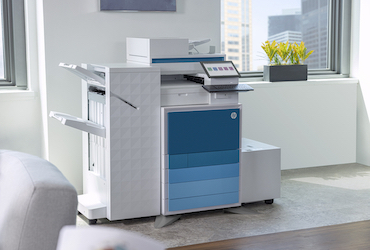
What does a copier lease actually cost in 2026?
Ask five copier sales reps for a quote and you will get five different numbers. Why? The sticker price rarely tells the full story of what you will pay each month for five years. Before we pick apart the fees, here is the pricing you can expect from a reputable dealer this year.
| Machine Tier | Typical Speed | Monthly Lease | Best For |
|---|---|---|---|
| Basic black-and-white MFP | 25 to 30 ppm | $89 to $150 | Home offices, small clinics, legal satellite offices |
| Mid-range color MFP | 35 to 50 ppm | $150 to $450 | Most small and mid-size businesses |
| Workgroup color MFP | 50 to 70 ppm | $450 to $850 | Marketing teams, growing professional offices |
| Production color copier | 70 to 100+ ppm | $850 to $1,200+ | Print shops, high-volume schools, municipal offices |
Those numbers assume a 60 month Fair Market Value lease with a bundled cost-per-copy agreement. Shorter terms bump the monthly payment. And buying outright pushes the acquisition cost into five figures for anything above the basic tier. The team at Smart Technologies recommends you collect at least three side-by-side quotes before signing. See our current copier and printer options for a starting point.
The average small-to-mid-size business pays each year in hidden copier lease fees that never show up on the initial quote.
Hidden fees turning a cheap copier lease expensive
A lease quote is a starting point, not a finish line. Every extra line item compounds over a 60 month term. So what should you actually look for?
1. Escalation clauses
Buried in the fine print, this clause lets the lessor raise your lease or service rate by a fixed percentage each year. Bumps of 5 to 15 percent are common. On a $400 monthly bill, a 10 percent annual hike becomes roughly $644 per month by year five. Over the life of the lease, you can pay 30 percent more than the quoted number. Ask to strike the clause, cap it at CPI, or cap it at a flat dollar amount before you sign. Our sister site covers this in detail in Copier Lease Escalation Clauses Explained.
2. Overage charges
Most cost-per-copy contracts set a monthly page allowance. Run past it and you pay per-page fees, usually $0.01 to $0.015 per black page and $0.06 to $0.12 per color page. These fees look small. They are not. A marketing office running 2,000 extra color pages in a busy month can see a $200 spike. Right-size the allowance based on a 12 month volume audit, not sales-rep guesswork.
3. Automatic renewal traps
Most leases auto-renew for 12 months if you miss a written notice window. The window is often 60 to 90 days before end of term, and the notice usually has to go out by certified mail. Miss it and you pay another year at full price on five-year-old equipment. Put the date on your calendar the day you sign. So many offices miss this one it has become the single most common complaint we hear from new clients.
4. Property tax pass-through
In Florida, leased equipment is subject to tangible personal property tax. Some lessors file and pay the tax, then pass it through to you with an admin markup. Others invoice a flat annual fee. Ask whether property tax is included and how it will be billed.
5. Insurance add-ons
Lessor-provided equipment insurance runs $5 to $15 per month per machine. If your commercial property policy already covers office equipment, waive the lease insurance and save $60 to $180 per year per device. One fleet of eight machines, one quick phone call to your insurance agent, real savings.
6. Delivery, installation, and network setup
Some dealers bundle these. Others itemize them. Network setup fees can run $150 to $500 per machine. Ask for a line-item breakdown before you sign, not after the truck shows up.
7. End-of-term pickup and shipping
Returning the machine at end of term is rarely free. Expect $150 to $500 per unit for freight and pickup. Negotiate this upfront, since it is usually quoted in vague terms like “reasonable shipping.”

Should you lease or buy your next copier?
The right answer depends on cash flow, volume, and how quickly your workflow changes. Here is a side-by-side to help you compare.
| Factor | Leasing | Buying |
|---|---|---|
| Upfront cost | $0 to $500 setup | $4,000 to $30,000+ |
| Monthly payment | Predictable, fixed | None (cap ex absorbed) |
| Service and toner | Usually bundled via CPC | Separate contract or break-fix |
| Technology refresh | Every 3 to 5 years | Replace when it fails |
| Cash flow impact | Low, spread over term | Large one-time hit |
| Total 5 year cost | Moderate to high | Lower if volume is stable |
| Tax treatment | Deductible as operating expense | Section 179 or depreciation |
For most Central Florida offices we serve, leasing wins. Why? Because it bundles service, caps downtime risk, and keeps your office on current technology. Buying still makes sense for stable, predictable print volumes, owners who prefer capital ownership, and teams with in-house IT support already. Our guide on leasing vs buying a copier walks through the numbers for your industry.
Contract red flags that should stop you from signing
Not every lease contract deserves your signature. Certain clauses hand too much power to the lessor and leave your business holding the bag. Watch for these.
- Uncapped escalation clauses. If the percent hike has no ceiling, walk away.
- Vague service response times. Demand written SLA numbers, not phrases like “prompt response.”
- All-or-nothing meter readings. Manual monthly reads invite billing errors. Ask for automated data collection.
- Hard 60 or 90 day return windows. Negotiate the window to match your planning cycle.
- Bundled software licenses you did not ask for. These often carry their own auto-renew terms.
- Third-party lease assignment without notice. Your lease may end up with a bank you never chose.
- No out for upgrades. If you grow, you should be able to upgrade without paying the full residual.
Each of these is negotiable. Sales reps expect pushback from informed buyers. Ask, and you will usually get a better contract.
How much more color copier leases cost per month than equivalent black-and-white models in 2026.
Understanding your cost-per-copy (CPC) agreement
The CPC agreement is the second half of every copier lease. It covers toner, parts, and service labor. Here is how the math works in plain English.
Typical 2026 CPC rates
Black pages run $0.01 to $0.015 each in a bundled contract. Color pages run $0.06 to $0.12 each. A small insurance agency printing 3,000 black pages and 800 color pages per month pays about $125 for service and supplies on top of the lease itself. Predictable costs, and far cheaper than buying toner cartridges retail.
Monthly minimums and allowances
Most CPC contracts include a minimum page count per month, usually 1,500 to 5,000 pages depending on your machine tier. You pay for those pages even if you do not print them. So the right question is not “what is your CPC rate,” but “what is my average volume across the last 12 months, and where should the minimum land?”
Bundle or break out?
A bundled CPC agreement rolls the lease payment and the service cost into one monthly invoice. This keeps your bookkeeping simple. Breaking the two apart can reveal each line item, but it usually adds complexity without saving money. Most of our Daytona Beach and Orlando clients prefer the bundle.
What Daytona Beach and Orlando businesses should expect
Central Florida has a competitive office equipment market. Good news for buyers. It also means pricing varies more than in other regions, so you need to do your homework.
Most small and mid-size offices in Volusia and Orange counties pay between $150 and $450 per month for a mid-range color MFP. Multi-location healthcare practices and law firms typically run fleets of three to eight machines with monthly spend between $800 and $3,500 after service. Schools, municipalities, and print-heavy operations can easily cross $10,000 per month when full fleet management is included.
Hurricane season adds one Florida-specific wrinkle: plan for a week of potential downtime each summer. A dealer with local technicians, local parts inventory, and a real service bay (not just a sales office) matters more here than in inland markets. Smart Technologies keeps parts and loaner units in Daytona Beach so our Florida clients stay productive through the worst weeks.
How Smart Technologies helps you win on lease cost
Volume Audit
We pull 12 months of real print data before quoting, so your allowance matches how your team actually works.
No Escalation Clauses
Our standard agreement locks your rate for the full term. No sneaky annual hikes.
Bundled Service
Toner, parts, and labor roll into one predictable monthly invoice. You never chase a service ticket.
Local Technicians
Daytona Beach-based techs, local parts inventory, and same-day or next-day response across Central Florida.
Plain-English Contracts
Every clause explained in writing before you sign. We read the fine print so you do not have to.
True-Up Reviews
Quarterly volume reviews so your allowance stays right-sized and overages stay rare.
Fair Market Value vs $1 buyout lease: which fits your business?
Two lease structures dominate the copier world, and the difference can shift your total cost by thousands of dollars.
Fair Market Value (FMV) lease
An FMV lease ends with three options: return the machine, buy it at its current market value, or renew. Monthly payments run lower than a $1 buyout because the residual value stays with the lessor. FMV is our recommendation for most offices, since it keeps you on modern equipment and avoids the hassle of selling a five-year-old copier. The IRS also treats FMV payments as a pure operating expense, which keeps your bookkeeping clean.
$1 buyout (Capital) lease
A $1 buyout lease acts more like a loan. You pay slightly higher monthly payments, then own the machine for one dollar at the end of the term. Good fit if you want the asset on your balance sheet, if your volume is stable for seven-plus years, or if you qualify for Section 179 depreciation. Keep in mind: owning a copier after five years means handling your own toner, service, and end-of-life disposal unless you sign a separate service contract.
Operating lease with refresh
Some dealers offer a hybrid: an operating lease with a built-in refresh at month 36 or 48. You pay a flat rate, and the dealer swaps the machine for a newer model mid-term at no extra charge. This is a premium product, and pricing runs 10 to 15 percent higher than a straight FMV deal. For creative agencies and growing firms with shifting volume, the refresh clause can be worth the premium.
Questions to ask before you sign a copier lease
- What is the total cost over the full lease term, with all fees included?
- Is there an escalation clause, and can it be capped or removed?
- What is the monthly page allowance and the exact overage rate for black and color?
- Does the service include toner, parts, drums, and labor?
- What is the response time SLA, and what is the remedy for missed SLAs?
- How and when does the lease auto-renew, and how do I give notice?
- Who pays the Florida tangible personal property tax, and how is it billed?
- What are the end-of-term options: buyout, return, renew, or upgrade?
- What does the upgrade path cost if I outgrow the machine in year two or three?
- Can I get the last three customer references in my zip code?
Write these questions down and ask every dealer the same list. A trustworthy vendor welcomes the questions. A sketchy one will stall.
Beyond price: two cost drivers most offices overlook
Security features worth paying for
Modern copiers store documents on internal hard drives, a hidden security risk if the machine leaves your office without proper data wiping. The CISA cybersecurity best practices guidance is a solid starting point for any small business evaluating device risk. NIST publishes helpful guidance on small business cybersecurity basics, and most enterprise copiers now include hard drive encryption, secure print release, and automatic overwrite. Ask whether these features are included or optional add-ons. A breach costs far more than a higher monthly lease rate.
Energy use and printing volume
Energy Star certified copiers draw 30 to 60 percent less power than older models. Over a 60 month lease, those savings show up on your electric bill. So does printing less: a well-tuned managed print program often cuts total page volume by 15 to 25 percent through default duplex, rules-based routing, and better user reporting. Our managed print program delivers both benefits.
Copier lease cost FAQs
What is the average copier lease cost in 2026?
Most small and mid-size offices pay between $150 and $450 per month for a mid-range color multifunction copier on a 36 to 60 month term. Basic black-and-white units start near $89 per month, and production-grade color machines can run past $1,200 per month. Smart Technologies builds every quote around real page volume, so you are not paying for speed or features you will never use.
What hidden fees should I look for in a copier lease contract?
Watch for escalation clauses (annual rate hikes of 5 to 15 percent), overage charges, shipping and removal fees at end of term, property tax pass-through, insurance add-ons, and automatic renewal windows. Each one looks small on paper. Add them up across 60 months and the true cost of the lease can jump 20 percent or more.
How does an escalation clause work?
An escalation clause lets the lessor raise your service or lease rate by a fixed percentage every year. A 10 percent annual bump on a $400 monthly bill becomes roughly $644 by year five. Ask for the clause to be capped, indexed to CPI, or struck entirely before you sign.
What are overage charges and how do I avoid them?
Overage charges apply when you exceed the monthly page allowance in your cost-per-copy agreement. Typical rates run $0.01 to $0.015 per black page and $0.06 to $0.12 per color page in 2026. Right-size the allowance to your actual volume, and ask for quarterly true-ups instead of strict monthly caps.
Is it cheaper to lease or buy a copier in Central Florida?
Leasing preserves cash flow, bundles service, and keeps you on current technology. Buying can be cheaper over 7 to 10 years if you pay cash, have in-house service, and your volume is stable. For most Daytona Beach and Orlando offices, a Fair Market Value lease with a bundled cost-per-copy contract gives the lowest total cost when you count uptime and support.
What lease term should I choose: 36, 48, or 60 months?
Shorter terms cost more per month but lower total risk. 36 months is our recommendation for fast-growing teams or firms planning workflow changes. 60 months keeps the payment low for stable volumes. We rarely recommend going past 60 months, since copier technology shifts every three to four years.
Can I get out of a copier lease early?
Yes, but it costs. Early termination usually requires paying the remaining lease balance plus any residual value. Some lessors allow upgrade programs that roll the remaining balance into a new lease. Read the buyout section before you sign, and ask Smart Technologies for a side-by-side comparison.
What happens at the end of a copier lease?
You typically have three options: buy the unit for fair market value, return it, or renew. Many leases auto-renew for 12 months if you miss the notice window, which is often 60 to 90 days before end of term. Mark that date on your calendar the day you sign.
Does a copier lease cover service, toner, and parts?
The lease itself covers the machine. A separate cost-per-copy (CPC) or managed print services (MPS) agreement covers toner, parts, and labor. Bundling both into one invoice keeps billing simple and prevents surprise service charges. Smart Technologies structures all-inclusive agreements for Central Florida clients.
How much does insurance add to a copier lease?
Lessor-provided insurance usually runs $5 to $15 per month per machine. Many businesses already cover office equipment under their commercial property policy, so you can often waive the lease insurance line and save $60 to $180 per year per device.
Are color copier leases really more expensive than black-and-white?
Yes. Color copiers cost 30 to 60 percent more per month than equivalent black-and-white models. The bigger gap shows up in cost-per-copy rates, where color pages run five to ten times the price of black pages. Track your real color page share before you choose a color MFP.
Why choose Smart Technologies of Florida for your copier lease?
We have served Florida businesses since 1999 from our Daytona Beach headquarters. Every quote includes a page volume audit, honest cost-per-copy pricing, and no escalation clauses by default. Our team supports clients across Daytona Beach, Orlando, Jacksonville, and Central Florida with same-day and next-day service coverage.
Ready for a copier lease without hidden fees?
Business Transformation Agency
Get a transparent, line-item copier lease quote from a Florida team serving local businesses since 1999.