Sustainability and Copier Leasing: How Leasing Helps Florida Businesses Reduce E Waste and Go Green

April 2, 2026
 367 views
 0 comments
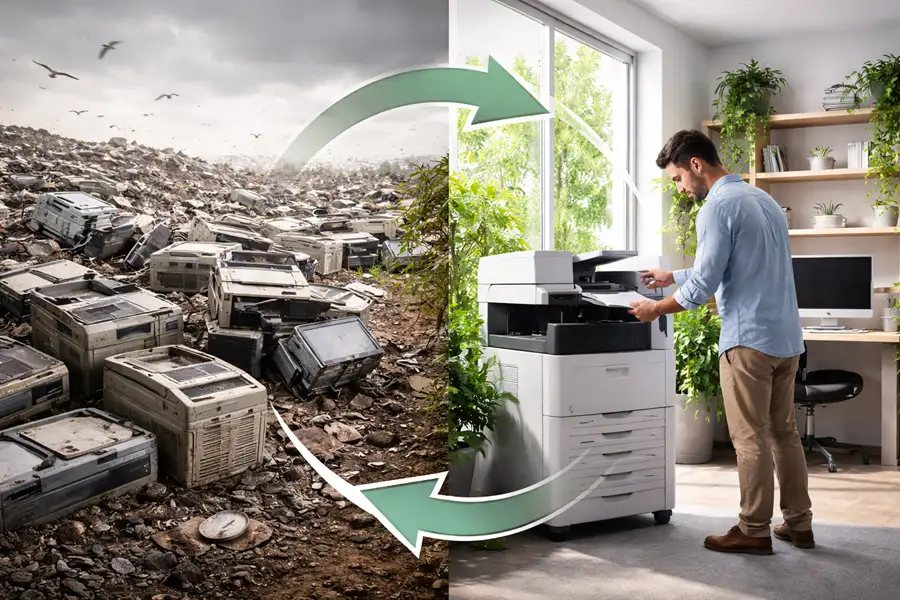
Your company probably cares about sustainability. You’ve switched to LED lighting. You’ve optimized HVAC systems. You’ve reduced paper usage and encouraged digital workflows. But there’s one area most Florida businesses haven’t thought about: what happens to office equipment at the end of its life.
Every year, millions of tons of electronic waste ends up in landfills. Copiers. Printers. Computers. Office equipment that could be refurbished and used for another five to ten years instead gets dumped. The environmental impact is enormous. The waste is preventable.
If sustainability matters to your Orlando or Gainesville business, copier leasing might be the single most impactful sustainability decision you can make. Let’s talk about why.
The E Waste Problem
Electronic waste is one of the fastest growing waste streams globally. The United States generates roughly 6.9 million tons of e-waste per year. Only about 15 to 20 percent gets recycled. The rest ends up in landfills, incinerators, or illegally exported to developing countries.
Office equipment like copiers is a significant part of the problem. A typical large copier weighs hundreds of pounds and contains valuable materials: metals, plastics, electronic components, toner. When that equipment gets thrown away instead of refurbished or recycled, all those materials are wasted.
Worse, the manufacturing process for new office equipment is energy intensive and environmentally damaging. You’re mining materials. You’re manufacturing complex components. You’re shipping equipment across the world. All of that has a carbon footprint.
Here’s the key insight: if you could extend the useful life of office equipment by just five years through refurbishment and reuse, you’d dramatically reduce the environmental impact.
How Leasing Creates a Circular Economy
Leasing fundamentally changes the business model around office equipment. When you buy equipment, you own it forever. When it breaks down or becomes obsolete, you’re responsible for disposal. Many businesses don’t properly recycle. Equipment ends up in storage or landfills.
When you lease equipment, the vendor owns it. They’re responsible for managing the entire lifecycle. This creates an economic incentive to refurbish, reuse, and recycle.
Here’s how it works:
- You lease the equipment for 3 to 5 years
- At lease end, the equipment is returned to the vendor
- The vendor assesses the equipment’s condition
- If functional, it’s refurbished and leased to another customer
- If not functional, it’s recycled responsibly
- Materials are recovered and reused in manufacturing
This circular economy model keeps equipment in use longer and ensures responsible recycling at end of life. It’s dramatically better for the environment than the traditional buy-and-throw-away model.
The Lifecycle Advantage
Let’s compare the environmental impact of two approaches:
Scenario One: Buying Equipment
You purchase a copier. You use it for 5 years. Then it becomes outdated or breaks down. You’re responsible for disposal. Often, it sits in a storage room for years before eventually getting thrown away. The manufacturing impact, energy consumption, and disposal waste all add up.
Scenario Two: Leasing Equipment
You lease a copier for 5 years. At the end of the lease, it’s returned. If it’s still functional (and it probably is), it’s refurbished and leased to another company. That company uses it for another 5 to 7 years. Only when it truly reaches end of life is it recycled. Total useful life: 10 to 12 years.
The environmental impact difference is substantial. By doubling the useful life through refurbishment and reuse, you cut the manufacturing and disposal impact roughly in half.
For businesses in Orlando and Gainesville with sustainability commitments, this matters. Leasing isn’t just about cost and flexibility. It’s about reducing your environmental footprint.
Energy Efficiency Improvements
Modern leased equipment is significantly more energy efficient than older models. This matters because copiers use energy continuously. Sleep modes, LED technology, and optimized power management reduce electricity consumption by 30 to 50 percent compared to equipment from just five years ago.
When you lease, you have the option to upgrade to newer, more efficient equipment more frequently. This might seem counterintuitive from a sustainability perspective, but it’s not. Newer equipment consumes less electricity over its lifetime, reducing your carbon footprint.
The math works like this: the energy savings from newer equipment over 3 to 5 years often outweigh the manufacturing impact of producing a new device.
Toner and Supply Recycling
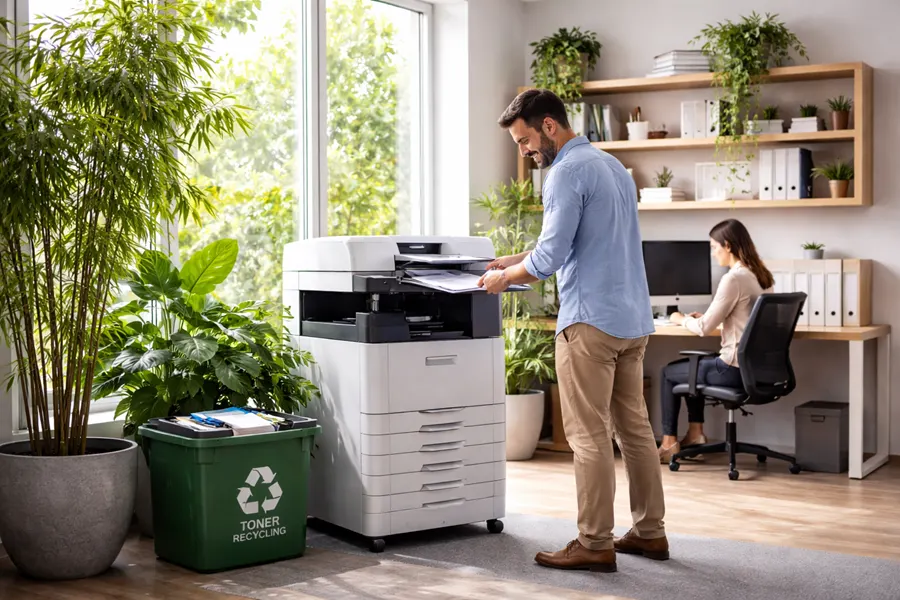
Every toner cartridge your copier uses has environmental impact. Manufacturing requires plastic, metal, and chemical compounds. Discarded cartridges often end up in landfills.
Responsible lease vendors have toner recycling programs. Empty cartridges are collected and recycled rather than thrown away. The plastic and metal components are recovered and reused. Many cartridges are refilled and resold, extending their useful life.
Some lease vendors also offer sustainable toner options with soy based inks and recyclable packaging. When you lease from a company with strong environmental practices, you’re automatically supporting these sustainable supply chains.
Reduced Carbon Footprint
The total carbon footprint of office equipment includes manufacturing, transportation, energy consumption during use, and disposal. Leasing reduces this footprint in multiple ways:
- Extended useful life means less frequent manufacturing
- Refurbishment is less energy intensive than manufacturing new equipment
- Newer, more efficient equipment reduces energy consumption
- Responsible recycling prevents toxic chemicals from entering ecosystems
- Consolidated supply chains reduce transportation impact
Studies show that leasing can reduce the carbon footprint of office equipment by 30 to 40 percent compared to buying and disposing of equipment.
Data Security and Environmental Responsibility
When you lease equipment, secure data destruction is part of the process. The vendor uses certified wiping procedures to ensure data is completely removed from hard drives before equipment is refurbished or recycled.
This protects both your privacy and the environment. Responsible data destruction prevents sensitive information from being accessed. Certified recycling ensures hazardous materials are handled properly rather than contaminating soil and water.
Demonstrating Sustainability Commitment
For many organizations, sustainability is a brand value. Customers, employees, and investors care about environmental responsibility. When you lease equipment from vendors with strong recycling and sustainability practices, you can communicate that commitment authentically.
You’re not just talking about sustainability. You’re structuring your business operations to reflect those values. You’re participating in a circular economy. You’re reducing e-waste.
This is especially true in communities like Orlando and Gainesville where environmental consciousness is high and consumers actively choose to support sustainable businesses.
Making the Sustainable Choice
If sustainability matters to your Florida business, look carefully at how you’re sourcing and disposing of office equipment. Leasing from vendors with strong environmental practices is often the most impactful sustainability decision you can make in your office operations.
Smart Technologies of Florida is committed to sustainable practices. We refurbish equipment, recycle responsibly, and partner with recyclers who follow strict environmental and labor standards. When you lease from us, you’re choosing a vendor that takes sustainability seriously.
Let’s talk about how to reduce your environmental footprint through smarter equipment decisions.
Frequently Asked Questions
What happens to copiers at the end of a lease?
Leased copiers are returned to the vendor. Instead of going to a landfill, they're refurbished if they're still functional, recycled if they're not, or responsibly disposed of. The vendor manages the entire lifecycle, which is better for the environment than you managing disposal.
How much e waste does the copier leasing industry prevent?
By leasing instead of buying, businesses prevent millions of tons of office equipment from entering landfills yearly. Refurbished equipment extends product lifecycles by 5 to 10 years. When you multiply this across millions of leases, the environmental impact is significant.
Can leased copiers be energy efficient?
Yes. Modern leased copiers use significantly less energy than older models. Features like automatic sleep modes, LED technology, and optimized power management reduce energy consumption by 30 to 50 percent compared to equipment from just five years ago.
How are toner cartridges recycled?
Most lease vendors have toner recycling programs where empty cartridges are collected and recycled. The plastic and metal components are recovered and reused. Many cartridges are refilled and resold, reducing the need for virgin manufacturing.
Is leasing really more sustainable than buying?
Yes. Leasing ensures equipment is properly maintained, refurbished at end of life, and responsibly recycled. The vendor manages the entire lifecycle, optimizing for sustainability. Buying equipment means you're responsible for disposal and often leads to devices sitting unused in storage.
What happens to copiers at the end of a lease?
Leased copiers are returned to the vendor. Instead of going to a landfill, they're refurbished if they're still functional, recycled if they're not, or responsibly disposed of. The vendor manages the entire lifecycle, which is better for the environment than you managing disposal.
How much e waste does the copier leasing industry prevent?
By leasing instead of buying, businesses prevent millions of tons of office equipment from entering landfills yearly. Refurbished equipment extends product lifecycles by 5 to 10 years. When you multiply this across millions of leases, the environmental impact is significant.
Can leased copiers be energy efficient?
Yes. Modern leased copiers use significantly less energy than older models. Features like automatic sleep modes, LED technology, and optimized power management reduce energy consumption by 30 to 50 percent compared to equipment from just five years ago.
How are toner cartridges recycled?
Most lease vendors have toner recycling programs where empty cartridges are collected and recycled. The plastic and metal components are recovered and reused. Many cartridges are refilled and resold, reducing the need for virgin manufacturing.
Is leasing really more sustainable than buying?
Yes. Leasing ensures equipment is properly maintained, refurbished at end of life, and responsibly recycled. The vendor manages the entire lifecycle, optimizing for sustainability. Buying equipment means you're responsible for disposal and often leads to devices sitting unused in storage.
Ready to Find the Right Copier Solution?
Smart Technologies of Florida has served Central Florida businesses since 1999. Call us at (386) 252-2292 for a free, no-obligation quote, or request one online. Business Transformation Agency.
Smart Technologies of Florida | 771 Fentress Blvd Suite 10, Daytona Beach, FL 32114 | (386) 252-2292 | smarttechfl.com
Related Posts

— How Printer Leasing Can Save Your Business Money

— The Advantages of Copier Leasing for Small Businesses in Daytona Beach