Short Term Copier Rental vs. Long Term Lease: Which Makes Sense for Your Situation?

May 5, 2026
 329 views
 0 comments
Short Term Copier Rental vs. Long Term Lease: Which Makes Sense for Your Situation?
We help businesses figure out whether temporary rental or a long term lease is the right fit for their specific needs.
There’s a question we hear from businesses across Florida that don’t fit the standard mold. Some are startups in Orlando trying to figure out if they should commit to equipment before they know their real volume. Others are event planners handling temporary document needs. Some are construction companies with seasonal staffing. Some own businesses in Volusia County dealing with seasonal tourism impacts. They all ask the same question: “Do I really need a long term lease, or should I just rent something short term?”
The answer matters because it affects your cash flow, your flexibility, and how you budget for the next few years. Let’s walk through how short term rental and long term leasing actually work, and help you figure out which one makes sense for your situation.
Understanding Short Term Rental
A short term rental is exactly what it sounds like. You need a copier for a specific period, days to a few months, and you pay for that period. You don’t sign a long term contract. You return the equipment when you’re done.
Here’s what a short term rental typically includes:
- Flexible commitment, from a few days to a few months
- Delivery and setup included
- All supplies and basic maintenance included
- Return pickup is arranged by the rental company
- No long term contract or penalty for early return
- Higher daily or monthly rate than long term lease
- Minimal paperwork and quick deployment
The key feature of short term rental is flexibility. You can stop whenever you need to. There’s no penalty. You’re not locked in. The tradeoff is that the monthly rate is higher because the rental company is taking more risk.
Understanding Long Term Lease
A long term lease is a multi year commitment, typically three to five years. You sign a contract, you commit to a monthly payment, and you have equipment for that full period. At the end, you either renew or return it.
Here’s what’s included in a long term lease:
- Fixed term, usually three to five years
- Predictable monthly cost for the entire term
- Installation and network setup
- Maintenance, repairs, and supplies included
- Equipment replacement if it becomes unreliable
- Committed support from your leasing partner
- Lower monthly rate than short term rental
- Early termination usually has penalties or fees
The long term lease is built on certainty. You know what you’re paying every month for years. You have stable equipment and a partnership with someone who’s invested in making it work. The tradeoff is commitment. If your needs change, you’re obligated to continue unless you’re willing to pay to get out of the contract.
When Short Term Rental Makes Real Sense
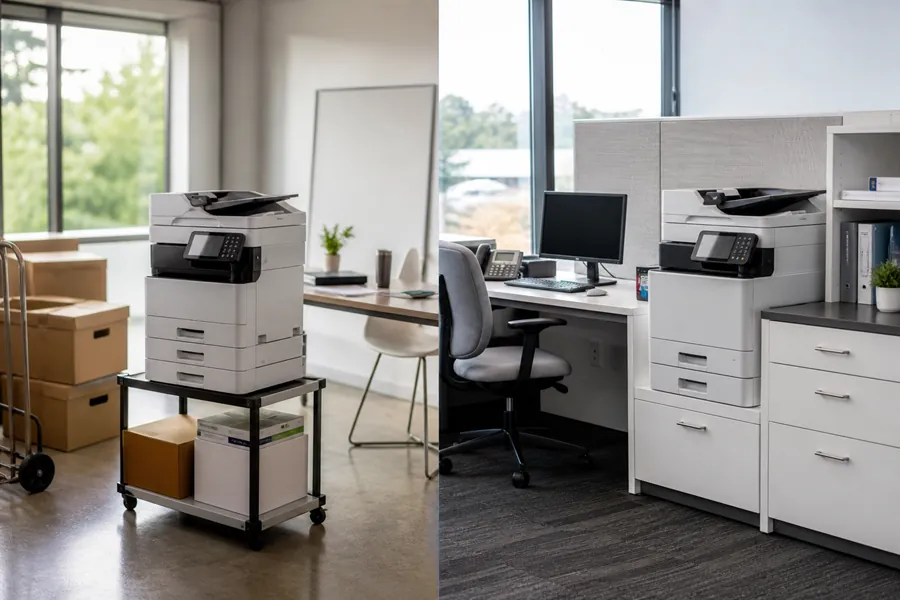
We recommend short term rental in specific situations:
You’re in a Temporary Situation
A construction company in the Space Coast area with a year long project that requires document management. An event firm in Orlando handling the convention season. A temporary staffing expansion at a business in Volusia County. These are situations where you know it’s temporary. Rental is perfect.
You’re Testing Your Needs Before Committing
A new startup in Melbourne isn’t sure how much they’ll print or what features they actually need. Renting for two or three months lets them understand their real needs before signing a three year lease. That’s a smart use of rental.
Your Permanent Equipment Is Down
Your main copier breaks and you’re waiting for a repair or replacement. A short term rental bridges the gap. You don’t need to lease something new, you just need to get through a week or two of downtime.
You’re Between Permanent Setups
You’re moving offices, or you’re transitioning from one equipment setup to another. A short term rental covers that gap period without adding long term costs.
Peak Season or Cyclical Needs
A seasonal business in Volusia County might need extra capacity during high season. Renting temporarily handles that without locking in costs for all twelve months.
You Need It for Days or Weeks
A law firm handling a major document intensive case. A consulting firm onboarding a large client with specific document needs. These are situations where you genuinely only need equipment short term.
When Long Term Lease Makes Real Sense
We recommend long term leasing in most other situations:
You Know Your Needs and They’re Stable
You’ve been in business for years. You know your printing volume. You understand what you need. A long term lease locks in costs and gives you certainty.
You Want Budget Predictability
Your business is stable and you want to know exactly what equipment will cost every month for the next few years. Long term lease provides that certainty.
You Want a Vendor Partnership
You’re interested in having a partner who cares about your success, not just a vendor who rents you stuff. Long term leasing relationships develop that partnership because both sides are invested in success over years.
You Want Latest Technology
Modern copiers get updated regularly. With a long term lease, you can upgrade or refresh equipment as technology improves. With a short term rental, you get whatever is available at that moment.
You Plan to be in Business for Years
If you’re building something long term, a long term lease is appropriate. You’re making a commitment that matches your business timeline.
You Want Strategic Support
If you’re interested in managed print services, optimization, and strategic guidance, that comes with long term leasing relationships. Rental is transactional. Leasing can be strategic.
Real Scenarios from Central Florida Businesses
Scenario 1: The Startup in Winter Park
A new software company is launching with three employees. They’re not sure what their document needs will be. Should they rent or lease? They should absolutely rent for the first three months. That costs about $1,200. After three months, they understand their real needs and can make an informed lease decision. If they’d signed a three year lease blind, they might have locked in the wrong equipment at the wrong cost.
Scenario 2: The Construction Company in Volusia County
A general contractor has a two year project that requires heavy document management. They’re hiring a temporary team just for this project. They need a copier for those two years, but not beyond. Should they rent or lease? Renting for two years would cost about $14,000 to $19,000. A two year lease costs about $10,000 to $15,600. They’re better off leasing, negotiating a lease that matches their project timeline, then returning equipment when the project ends.
Scenario 3: The Event Firm in Orlando
An event planning company handles conferences and conventions. During peak season (October to March), they’re managing multiple events with heavy paperwork. During off season (April to September), they don’t need much. Should they rent or lease? They should lease a base machine that handles their standard needs, and rent additional capacity during peak season. That gives them the cost benefit of leasing for baseline needs and the flexibility of renting for peaks.
Scenario 4: The Melbourne Firm in Transition
An established business is moving offices next quarter. They have a five year lease that ends next year anyway. They don’t want to lease new equipment that might be wrong for the new space. They could rent for four months while they move and settle in, then lease permanent equipment. Renting for four months costs about $2,800. That’s completely reasonable for the flexibility it provides.
The Hybrid Approach
Some businesses use a hybrid strategy that actually works really well. They lease a standard machine that covers their base needs. During peak seasons or temporary projects, they rent additional capacity. This gives them the cost benefit of leasing the baseline while maintaining flexibility for temporary spikes.
A business might lease one copier that costs $500/month and covers their standard 30,000 page monthly volume. When they have a temporary project or peak season pushing them to 50,000 pages, they rent an additional machine for a few months. They save money compared to leasing extra permanent capacity they won’t use year round, and they maintain flexibility.
The Key Question That Decides Everything
Here’s the one question that usually clarifies the decision: “How long will I need this equipment?” If you know the answer and it’s six months or less, rent. If you know the answer and it’s longer than that, lease. If you don’t know the answer, rent short term to figure it out, then commit to a lease based on what you learn.
The businesses we work with in the Space Coast, Volusia County, and throughout Orlando that are happiest with their equipment decisions are the ones that made the choice for a reason. They understood their situation, they understood their timeline, and they picked the option that matched.
The worst decision is leasing long term when you actually need short term flexibility, or renting for months when you know you’ll need equipment for years. Get clear on your actual situation first, then choose the option that fits.
Getting Started with Either Option
Whether you choose rental or lease, you want a partner who can get you set up quickly, deliver reliable equipment, and support you when something needs attention. We work with businesses across Central Florida in both situations.
If you’re renting, we can have equipment at your location within days. If you’re leasing, we can build a solution that matches your timeline and your budget. Either way, we’ve done this hundreds of times and we know how to get it right.
Frequently Asked Questions
How long is a typical short term copier rental?
A typical short term copier rental ranges from a few days to a few months. Most businesses rent for anywhere between one week and six months depending on their specific needs, whether it's for a temporary project, peak season, or while equipment is being repaired.
What is the minimum copier lease term?
Most copier leases have a minimum term of two to three years, with five year leases being very common. This longer commitment allows leasing companies to offer lower monthly rates and ensure they have a stable customer relationship.
Can I rent a copier for just one week?
Yes, absolutely. One of the key benefits of short term rental is flexibility. Whether you need a copier for one week, two weeks, or several months, rental companies can accommodate those shorter timeframes. Rental is ideal for temporary situations like conferences, events, or temporary projects.
Is it cheaper to rent or lease a copier?
It depends on your timeline. For very short periods (under six months), renting is usually your only option. For anything longer than six months, leasing becomes more cost effective. For example, renting for 12 months typically costs double what a 12 month lease would cost. The break even point is around four to six months of usage.
What happens if I need to end my lease early?
Early termination of a lease usually comes with penalties or fees since you're breaking your contract. However, you can discuss this with your leasing partner. Some arrangements may allow for equipment swaps, upgrades, or negotiated early exits. This is one reason to discuss your timeline carefully before signing a lease.
Do rental copiers come with maintenance included?
Yes, maintenance is included in both rental and lease agreements. Both options include supplies, maintenance, repairs, and support. If the equipment breaks down, the rental or leasing company is responsible for fixing it quickly so you're not without a copier during your rental or lease period.
Ready to Find the Right Copier Solution?
Smart Technologies of Florida has served Central Florida businesses since 1999. Call us at (386) 252-2292 for a free, no-obligation quote, or request one online. Business Transformation Agency.
Smart Technologies of Florida | 771 Fentress Blvd Suite 10, Daytona Beach, FL 32114 | (386) 252-2292 | smarttechfl.com
Related Posts
— Your Office Copier Is a Security Risk: What Most Businesses in Daytona Beach and Orlando Don’t Realize
— The True Cost of Printing: Why Your Orlando Area Office Is Probably Spending More Than You Think