Copier Leasing for Medical Offices in Florida: HIPAA Compliance, Hard Drive Security, and What You Need to Know

April 7, 2026
 362 views
 0 comments
If you run a medical office in Florida, you’re handling one of the most sensitive types of information: patient health records. Whether your practice is nestled in the Daytona Beach corridor, serving the Flagler Beach community, operating in Titusville, or anywhere around Ormond Beach, the rules are the same. When you’re managing copiers and printers, HIPAA compliance isn’t optional. It’s a legal requirement that protects your patients and your practice.
But here’s the thing: most medical offices don’t realize how much patient data sits on their copier’s hard drive. Every time someone scans a medical form, faxes a patient record, or stores a document in the device’s memory, that information gets saved. And if that copier isn’t properly secured or wiped at the end of your lease, you could have a serious breach on your hands.
Let’s talk about what you actually need to know about HIPAA compliant copier leasing in Florida and how to protect your practice.
Understanding HIPAA and Your Copier
HIPAA stands for the Health Insurance Portability and Accountability Act. For medical offices, it means you have strict rules about protecting patient information. Those rules apply to every device that touches patient data, including your copier.
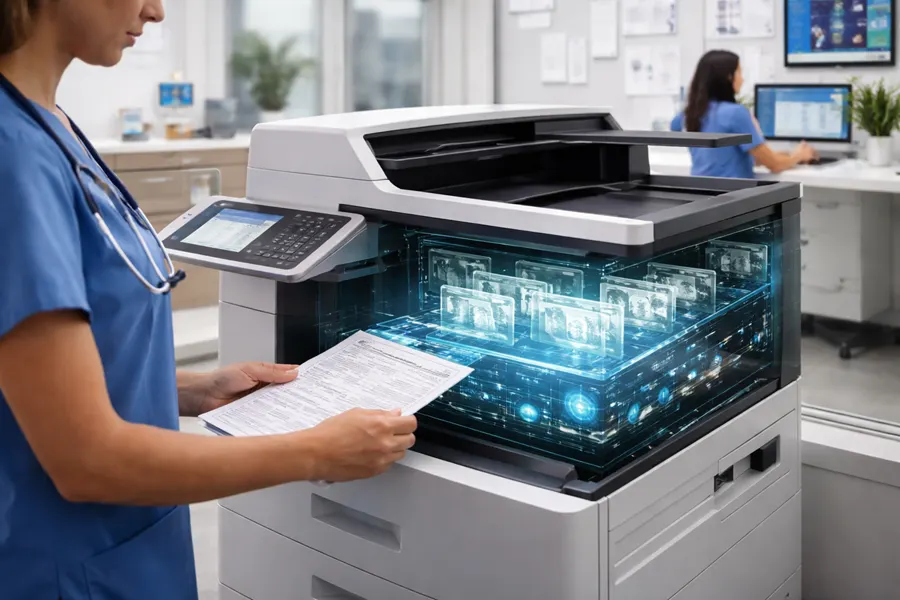
Here’s what most practice managers don’t realize: your copier is now a computer. Modern copiers have hard drives just like a laptop. They store images of every document that’s been copied, scanned, or faxed. If someone can access that hard drive, they can see patient information even after the original document has been destroyed.
HIPAA requires you to implement physical, technical, and administrative safeguards around patient information. For copiers, that means:
- Hard drive encryption that scrambles stored data
- Access controls that limit who can retrieve stored documents
- Audit trails that track every access and action
- Secure deletion protocols when the lease ends
- Fax encryption for secure transmission
- A signed Business Associate Agreement with your vendor
The Hard Drive Security Issue That Keeps Compliance Officers Up at Night
Let’s get specific about hard drive security because this is where most practices get into trouble.
Your copier’s hard drive stores everything. Documents that have been copied. Scanned images. Cached data from network transmissions. If that drive contains unencrypted patient information, you’re exposed. A HIPAA violation can result in fines ranging from $100 to $50,000 per violation. We’re talking tens of thousands of dollars or more.
When you lease equipment from Smart Technologies of Florida, we ensure that every copier includes:
- AES 256 bit encryption on the hard drive
- Automatic data overwriting protocols
- Tamper detection that alerts you if someone tries to access the drive
- Integration with your office security systems
This means patient data stays patient data, not a liability sitting on your printer.
Data Wiping at Lease Return: The Critical Final Step
Here’s where many medical practices have failed their compliance audits: they return the leased copier and assume the vendor will handle data destruction. That’s not good enough for HIPAA.
HIPAA requires you to have documented evidence that patient data has been permanently and irretrievably destroyed. When your lease ends, we don’t just delete files. We use certified data wiping procedures that exceed NIST (National Institute of Standards and Technology) standards. These procedures use multiple overwrite cycles to ensure no data recovery is possible.
You get a Certificate of Data Destruction from us that documents:
- The specific device (serial number and model)
- The wiping method used
- Verification that the drive is unrecoverable
- The date and person who performed the wiping
This certificate protects you. If you ever face a compliance audit or an investigation, you have proof that you took the required steps to protect patient information.
Audit Trails: Your Evidence That You’re Compliant
HIPAA requires you to maintain and be able to produce audit trails. This is the record of who accessed what patient information and when. Your copier should generate detailed logs showing:
- User ID of who accessed the document
- Date and time of access
- Whether the document was copied, scanned, or faxed
- Any failed access attempts (which could indicate a security breach)
These audit trails help you demonstrate compliance during regulatory reviews. They also help you identify unauthorized access quickly. If a compliance officer asks you to prove that only authorized staff accessed patient records, your copier’s audit trail is your evidence.
Fax Compliance and Secure Transmission
Medical offices still fax patient records. It’s a reality in healthcare. HIPAA requires that faxed information be encrypted and sent only to verified receiving numbers.
A compliant copier includes fax encryption that scrambles the document during transmission. It also allows you to program authorized fax numbers and prevent accidental transmission to wrong numbers. Some advanced systems use cover sheets that include HIPAA required notices and include delivery confirmation.
Business Associate Agreements: The Legal Foundation
You can’t lease a copier from just anyone if you’re a covered entity under HIPAA. The company you lease from must be willing to sign a Business Associate Agreement (BAA).
A BAA is a legal contract that says your vendor will follow HIPAA rules. It specifies how they’ll handle patient information, what security measures they’ll implement, how they’ll report breaches, and what happens if they violate HIPAA.
Smart Technologies of Florida has been in business for over 25 years, and we understand HIPAA. We’re happy to sign a BAA with every medical office we work with. No exceptions.
Choosing the Right Copier for Your Medical Practice
Not every copier on the market is HIPAA compliant. When you’re evaluating options, look for devices that specifically advertise HIPAA compliance features. Ask your vendor:
- Does the hard drive come encrypted from the manufacturer?
- Can you control who has access to stored documents?
- Does the system create detailed audit logs?
- How are documents automatically deleted from the drive?
- Can you access audit logs yourself for compliance reviews?
Volume matters too. If you’re a busy practice, you need a copier that can handle high volume duplex (two-sided) printing without slowing down. But speed shouldn’t come at the cost of security.
Regional Considerations for Florida Medical Offices
The Daytona Beach corridor has a significant healthcare sector. So do Flagler Beach, Titusville, and Ormond Beach. If you’re in any of these areas, you know that compliance isn’t just a legal requirement, it’s a competitive advantage. Patients trust practices that protect their data.
Florida’s healthcare regulatory environment is robust. The state has its own data breach notification laws that are sometimes stricter than federal requirements. Choosing a HIPAA compliant copier from a local vendor who understands Florida’s requirements puts you ahead of the curve.
The Bottom Line
HIPAA compliant copier leasing is essential for every medical office in Florida. It’s not just about following rules. It’s about protecting your patients, your practice, and your reputation. When you lease a copier from Smart Technologies of Florida, you’re leasing with a company that understands healthcare, knows HIPAA inside and out, and provides the security measures your practice needs.
Don’t gamble with patient data. Don’t assume your current copier is compliant just because it’s modern. Have a conversation with us about what your practice actually needs.
Frequently Asked Questions
What makes a copier HIPAA compliant?
A HIPAA compliant copier includes hard drive encryption, secure data deletion protocols, audit trails that track who accessed documents, and the ability to generate BAA compliance reports. The device must support encrypted faxing and prevent unauthorized access to stored files.
Do I need a Business Associate Agreement with my copier vendor?
Yes. If your copier stores, transmits, or processes patient information in any way, HIPAA requires a signed BAA with your vendor. This agreement legally obligates them to follow HIPAA rules and sets out how they'll handle Protected Health Information.
What happens to patient data on the copier hard drive when I return it?
Smart Technologies of Florida uses certified data wiping procedures that exceed NIST standards. We document the wiping process and provide you with a certificate of data destruction, ensuring all patient information is permanently and irretrievably removed before the device leaves your office.
Can patients request to see what documents were scanned on our copier?
While HIPAA doesn't specifically address this, best practices recommend maintaining audit logs that show document access. Modern HIPAA compliant copiers create detailed audit trails you can use to respond to patient inquiries about who accessed their records and when.
Are multifunction printers (print, copy, fax, scan) compliant if we only scan medical documents?
Yes, as long as the entire device has HIPAA compliant security features. However, we recommend using separate secure fax machines for faxing patient information. Multifunction devices add complexity, so verify that every function meets HIPAA encryption and access control standards.
How often should we audit our copier usage for compliance?
At minimum, conduct quarterly audits of copier access logs and document handling. Review who's accessing sensitive files and when. Annual audits with your IT team and compliance officer help ensure ongoing HIPAA compliance and identify any unauthorized access patterns.
Ready to Find the Right Copier Solution?
Smart Technologies of Florida has served Central Florida businesses since 1999. Call us at (386) 252-2292 for a free, no-obligation quote, or request one online. Business Transformation Agency.
Smart Technologies of Florida | 771 Fentress Blvd Suite 10, Daytona Beach, FL 32114 | (386) 252-2292 | smarttechfl.com
Related Posts
— Short Term Copier Rental vs. Long Term Lease: Which Makes Sense for Your Situation?
— Your Office Copier Is a Security Risk: What Most Businesses in Daytona Beach and Orlando Don’t Realize